About the Big Book
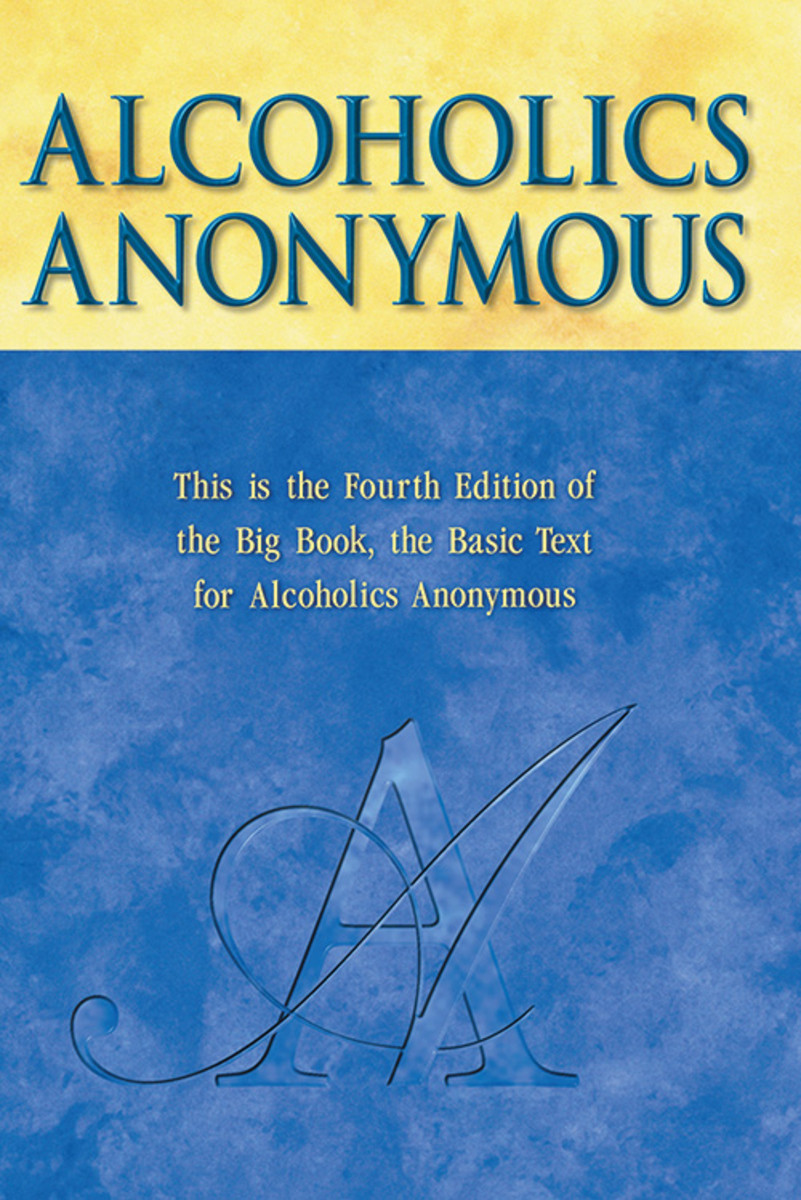
Alcoholics Anonymous, also known as the “Big Book,” presents the A.A. program for recovery from alcoholism. First published in 1939, its purpose was to show other alcoholics how the first 100 people of A.A. got sober. Now translated into over 70 languages, it is still considered A.A.’s basic text.
Explore the Big Book
- Read
- Watch
- Listen
-
Intro
Chapters
Personal Stories
Appendices
-
A.A. Big Book in ASL
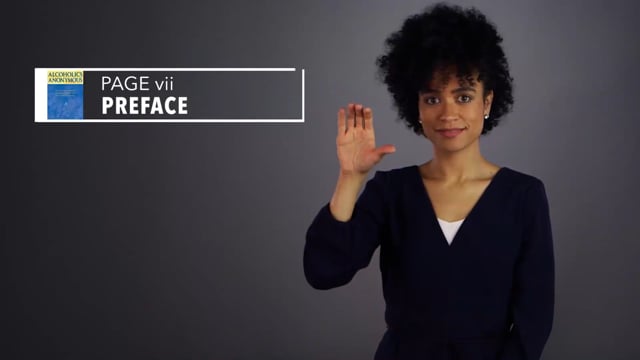 ASL Big Book - PrefaceThe Preface from the Fourth edition, of the Big Book, "Alcoholics Anonymous," the basic text of A.A. in American Sign Language (ASL).
A brief overview of the four editions of the Big Book of Alcoholics Anonymous. How the content outlining A.A.’s program of recovery has been retained, while some of the stories have been changed over time to reflect the current membership.
For more information on A.A., visit www.aa.org.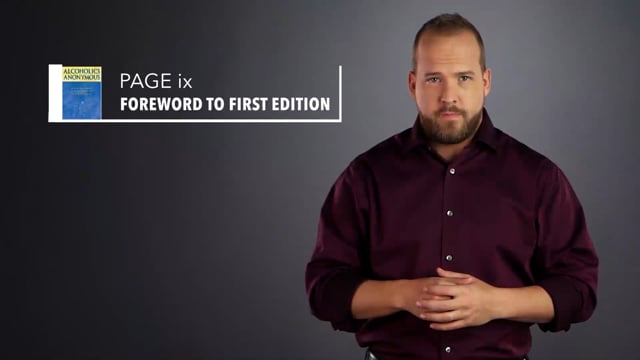 Big Book ASL - Foreword to First EditionThe Foreword to the First edition of the Big Book, "Alcoholics Anonymous," the basic text of A.A. in American Sign Language (ASL).
The original 1939 foreword. Introduces the Fellowship of Alcoholics Anonymous, then a group of 100 members who had “recovered from a seemingly hopeless state of mind and body.” States the book’s purpose: “to show other alcoholics precisely how we have recovered.” Stresses the importance of anonymity.
For more information on A.A., visit www.aa.org. Big Book ASL - Foreword to Second EditionThe Foreword to the Second edition of the Big Book, "Alcoholics Anonymous," the basic text of A.A.in American Sign Language (ASL).
Written in 1955. A brief history of Alcoholics Anonymous from 1939-55, including its growth in membership as well as its spread across the U.S., Canada and beyond. Introduces the Twelve Traditions for the first time. Gratitude for "friends of A.A."
For more information on A.A., visit www.aa.org. Big Book ASL - Foreword to Third EditionThe Foreword to the Third edition of the Big Book, "Alcoholics Anonymous," the basic text of A.A. in American Sign Language (ASL).
Written in 1976. Notes that A.A.membership was estimated at over one million in 90 countries, with participation of women and young people on the rise.
For more information on A.A., visit www.aa.org. Big Book ASL - Foreword to Fourth EditionThe Foreword to the Fourth edition of the Big Book, "Alcoholics Anonymous," the basic text of A.A. inAmerican Sign Language (ASL).
Written in 2001, at the “start of a new millennium.” Notes that A.A.membership wasover two million, with increasing diversity and global reach, thanks in large part to translations (Big Book in 44 language at the time) and technology (online meetings).
For more information on A.A., visit www.aa.org. Big Book ASL - The Doctor's OpinionThe Doctor's Opinion, from the Fourth edition of the Big Book, "Alcoholics Anonymous," the basic text of A.A. in American Sign Language (ASL).
Dr. William D. Silkworth, who treated Bill W. and other alcoholics, reported on the effectiveness of Alcoholics Anonymous, then in its infancy, describing the physical "allergy" and the "phenomenon of craving" characteristic of alcoholism, as well as the "psychic change" necessary for recovery.
For more information on A.A., visit www.aa.org. Big Book ASL - Chapter 1 - Bill's StoryChapter 1 - Bill's Story, from the Fourth edition of the Big Book, "Alcoholics Anonymous," the basic text of A.A. in American Sign Language (ASL).
Co-founder Bill W. recounts his descent from successful stockbroker to hopeless alcoholic—and explains how a visit from an old friend inspired his recovery and planted the seeds of Alcoholics Anonymous.
For more information on A.A., visit www.aa.org. Big Book ASL - Chapter 2 - There Is a SolutionChapter 2 - There is a Solution, from the Fourth edition of the Big Book, "Alcoholics Anonymous," the basic text of A.A. in American Sign Language (ASL).
Introduces the Fellowship of Alcoholics Anonymous as a diverse group of alcoholics who have “lost the power of choice in drink” and whose common solution to their problem with alcoholinvolves a profound “spiritual experience.”
For more information on A.A., visit www.aa.org. Big Book ASL - Chapter 3 - More About AlcoholismChapter 3 - More About Alcoholism, from the Fourth edition of the Big Book, "Alcoholics Anonymous," the basic text of A.A. in American Sign Language (ASL).
Illustrates the self-delusion of the active alcoholic through the stories of three men who continue to drink despite dire consequences, inevitably reaching a state of “pitiful and incomprehensible demoralization.”
For more information on A.A., visit www.aa.org. Big Book ASL - Chapter 4 - We AgnosticsChapter 4 - We Agnostics, from the Fourth edition of the Big Book, "Alcoholics Anonymous," the basic text of A.A. in American Sign Language (ASL).
Highlights a pathway to recovery for alcoholics who are atheist and agnostic while addressing the resistance some alcoholics may feel toward spirituality.
For more information on A.A., visit www.aa.org. Big Book ASL - Chapter 5 - How It WorksChapter 5 - How It Works, from the Fourth edition of the Big Book, "Alcoholics Anonymous," the basic text of A.A. in American Sign Language (ASL).
Presents the Twelve Steps — A.A.’s program of recovery — and provides direction on taking Steps One through Four.
For more information on A.A., visit www.aa.org. Big Book ASL - Chapter 6 - Into ActionChapter 6 - Into Action, from the Fourth edition of the Big Book, "Alcoholics Anonymous," the basic text of A.A. in American Sign Language (ASL).
Taking Steps Five through Eleven can help maintain not only physical sobriety but also personal transformation. This chapter describes how these Steps can lead to "a new freedom and a new happiness."
For more information on A.A., visit www.aa.org. Big Book ASL - Chapter 7 - Working with OthersChapter 7 - Working with Others, from the Fourth edition of the Big Book, "Alcoholics Anonymous," the basic text of A.A. in American Sign Language (ASL).
The transmission of A.A.’s message of hope from one alcoholic to another is the core of A.A.’s recovery program. As discussed in this chapter, the Twelfth Step encapsulates how this can happen.
For more information on A.A., visit www.aa.org. Big Book ASL - Chapter 8 - To WivesChapter 8 - To Wives, from the Fourth edition of the Big Book, "Alcoholics Anonymous," the basic text of A.A. in American Sign Language (ASL).
An alcoholic marriage can be fraught with distrust, frustration, loneliness and fear. This chapter, focused on the wives of alcoholics, explores some solutions.
For more information on A.A., visit www.aa.org.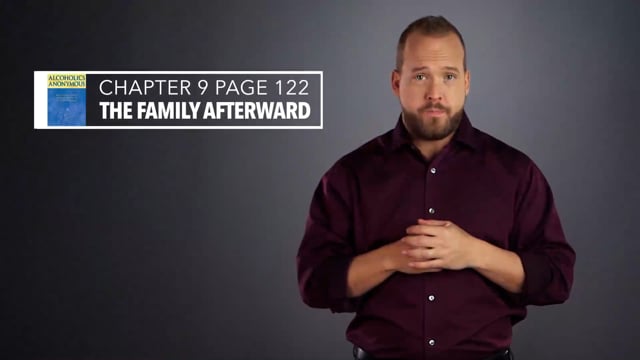 Big Book ASL - Chapter 9 - The Family AfterwardChapter 9 - The Family Afterward, from the Fourth edition of the Big Book, "Alcoholics Anonymous," the basic text of A.A. in American Sign Language (ASL).
Alcoholism affects not just the alcoholic but the entire family. This chapter offers hope and counsel to family members when the alcoholic is beginning to recover through Alcoholics Anonymous.
For more information on A.A., visit www.aa.org.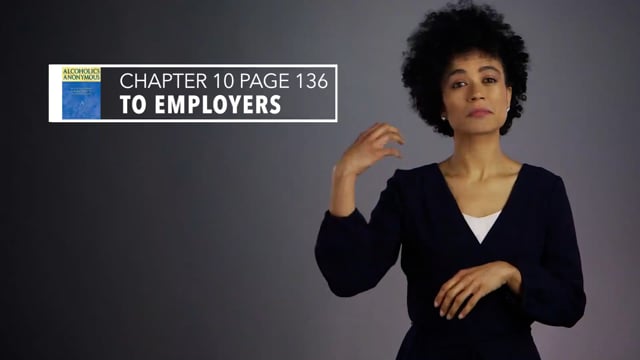 Big Book ASL - Chapter 10 - To EmployersChapter 10 - To Employers, from the Fourth edition of the Big Book, "Alcoholics Anonymous," the basic text of A.A. in American Sign Language (ASL).
Alcoholic employees can be disruptive to an organization. This chapter, directed to employers, outlines how problem drinkers in the workplace can be approached withA.A.’s message of hope and recovery.
For more information on A.A., visit www.aa.org.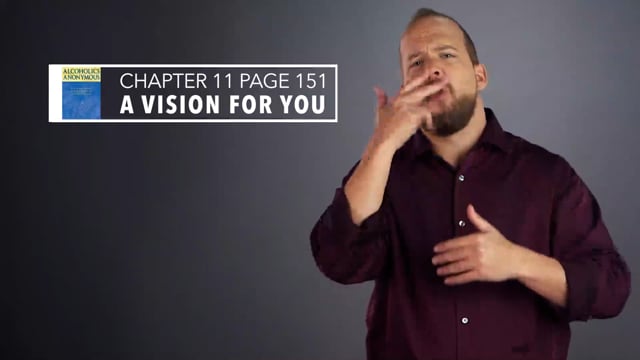 Big Book ASL - Chapter 11 - A Vision For YouChapter 11 - A Vision For You, from the Fourth edition of the Big Book, "Alcoholics Anonymous," the basic text of A.A. in American Sign Language (ASL).
This chapter recounts the birth of Alcoholics Anonymous: how the early members’ lives were transformed through the solution offered by A.A.’s program of recovery– a solution available to anyone who wants it.
For more information on A.A., visit www.aa.org.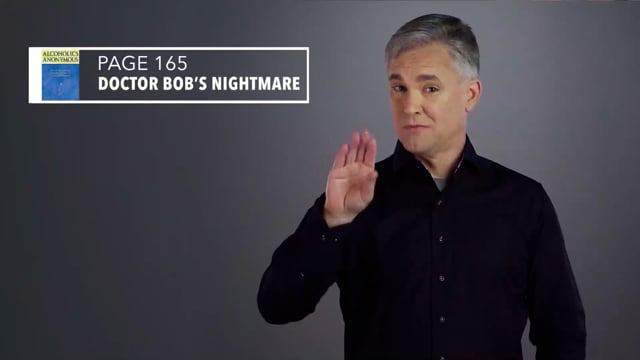 Big Book ASL - Doctor Bob's NightmareDr. Bob's Nightmare, from the Fourth edition of the Big Book, "Alcoholics Anonymous," the basic text of A.A. in American Sign Language (ASL).
A.A. co-founder Dr. Bob chronicles his many years as an active alcoholic and how meeting Bill W. enabled him to stop drinking.
For more information on A.A., visit www.aa.org. Big Book ASL - Appendix I – The A.A. TraditionAppendix I - The A.A. Tradition, from the Fourth edition of the Big Book, "Alcoholics Anonymous," the basic text of A.A. in American Sign Language (ASL).
The Twelve Traditions are a set of principles by which Alcoholics Anonymous functions most effectively.
For more information on A.A., visit www.aa.org. Big Book ASL - Appendix II – Spiritual ExperienceAppendix II - Spiritual Experience, from the Fourth edition of the Big Book, "Alcoholics Anonymous," the basic text of A.A. in American Sign Language (ASL).
Describes how a profound "personality change" lies at the heart of A.A.’s program of recovery.
For more information on A.A., visit www.aa.org. Big Book ASL - Appendix III – The Medical View on A.A.Appendix III - The Medical View on A.A., from the Fourth edition of the Big Book, "Alcoholics Anonymous," the basic text of A.A. in American Sign Language (ASL).
Five physicians endorse the therapeutic effectiveness of Alcoholics Anonymous.
For more information on A.A., visit www.aa.org. Big Book ASL - Appendix IV – The Lasker AwardAppendix IV - The Lasker Award from the Fourth edition of the Big Book, "Alcoholics Anonymous," the basic text of A.A. in American Sign Language (ASL).
Notes the American Public Health Association’s 1951 presentation of an award to Alcoholics Anonymous in recognition of its “highly successful approach” to recovery from alcoholism.
For more information on A.A., visit www.aa.org. Big Book ASL - Appendix V – The Religious View on A.A.Appendix V - The Religious View on A.A., from the Fourth edition of the Big Book, "Alcoholics Anonymous," the basic text of A.A. in American Sign Language (ASL).
Three members of the clergy "giving their blessing" to Alcoholics Anonymous.
For more information on A.A., visit www.aa.org. Big Book ASL - Appendix VI – How to Get in Touch With A.A.Appendix VI - How to Get in Touch with A.A., from the Fourth edition of the Big Book, "Alcoholics Anonymous," the basic text of A.A. in American Sign Language (ASL).
Practical tips on finding Alcoholics Anonymous both locally and nationally. Includes general information on Al-Anon Family Groups.
For more information on A.A., visit www.aa.org." Big Book ASL - Appendix VII – Twelve Concepts (Short Form)Appendix VII - Twelve Concepts, from the Fourth edition of the Big Book, "Alcoholics Anonymous," the basic text of A.A. in American Sign Language (ASL).
Written by Bill W., the Twelve Concepts for World Servicehelp to ensure thatA.A.’s service structure remains responsive and responsible to those it serves.
For more information on A.A., visit www.aa.org. -
Intro
Soundcloud URLThe Big Book: Title PageSoundcloud URLThe Big Book: Copyright InformationSoundcloud URLThe Big Book: PrefaceSoundcloud URLThe Big Book: Foreword to First EditionSoundcloud URLThe Big Book: Foreword to Second EditionSoundcloud URLThe Big Book: Foreword to Third EditionSoundcloud URLThe Big Book: Foreword to Fourth EditionSoundcloud URLThe Big Book: The Doctor's OpinionChapters
Soundcloud URLThe Big Book: Chapter 1 — Bill's StorySoundcloud URLThe Big Book: Chapter 2 — There Is a SolutionSoundcloud URLThe Big Book: Chapter 3 — More About AlcoholismSoundcloud URLThe Big Book: Chapter 4 - We AgnosticsSoundcloud URLThe Big Book: Chapter 5 — How It WorksSoundcloud URLThe Big Book: Chapter 6 — Into ActionSoundcloud URLThe Big Book: Chapter 7 — Working with OthersSoundcloud URLThe Big Book: Chapter 8 — To WivesSoundcloud URLThe Big Book: Chapter 9 — The Family AfterwardSoundcloud URLThe Big Book: Chapter 10 — To EmployersSoundcloud URLThe Big Book: Chapter 11 — A Vision for YouPersonal Stories - Part I
Soundcloud URLPERSONAL STORIESSoundcloud URLPart I — Pioneers of A.A.Soundcloud URLDoctor Bob's NightmareSoundcloud URL(1) Alcoholics Anonymous Number ThreeSoundcloud URL(2) Gratitude in ActionSoundcloud URL(3) Women Suffer TooSoundcloud URL(4) Our Southern FriendSoundcloud URL(5) The Vicious CycleSoundcloud URL(6) Jim's StorySoundcloud URL(7) The Man Who Mastered FearSoundcloud URL(8) He Sold Himself ShortSoundcloud URL(9) The Keys of the KingdomPersonal Stories - Part II
Soundcloud URLPart II — They Stopped In TimeSoundcloud URL(1) The Missing LinkSoundcloud URL(2) Fear of FearSoundcloud URL(3) The Housewife Who Drank at HomeSoundcloud URL(4) Physician, Heal ThyselfSoundcloud URL(5) My Chance to LiveSoundcloud URL(6) Student Of LifeSoundcloud URL(7) Crossing the River of DenialSoundcloud URL(8) Because I'm an AlcoholicSoundcloud URL(9) It Might Have Been WorseSoundcloud URL(10) TightropeSoundcloud URL(11) Flooded With FeelingSoundcloud URL(12) Winner Takes AllSoundcloud URL(13) Me an Alcoholic?Soundcloud URL(14) The Perpetual QuestSoundcloud URL(15) A Drunk, Like YouSoundcloud URL(16) Acceptance Was the AnswerSoundcloud URL(17) Window of OpportunityPersonal Stories - Part III
Soundcloud URL(1) My Bottle, My Resentments, and MeSoundcloud URL(2) He Lived Only to DrinkSoundcloud URL(3) Safe HavenSoundcloud URL(4) Listening to the WindSoundcloud URL(5) Twice GiftedSoundcloud URL(6) Building a New LifeSoundcloud URL(7) On the MoveSoundcloud URL(8) A Vision of RecoverySoundcloud URL(9) Gutter BravadoSoundcloud URL(10) Empty on the InsideSoundcloud URL(11) GroundedSoundcloud URL(12) Another ChanceSoundcloud URL(13) A Late StartSoundcloud URL(14) Freedom From BondageSoundcloud URL(15) A.A. Taught Him to Handle SobrietyAppendices
Soundcloud URLAPPENDICESSoundcloud URLThe Big Book: I - The A.A. TraditionSoundcloud URLThe Big Book: II - Spiritual ExperienceSoundcloud URLThe Big Book: III - The Medical View on A.A.Soundcloud URLThe Big Book: IV - The Lasker AwardSoundcloud URLThe Big Book: V - The Religious View on A.A.Soundcloud URLThe Big Book: VI - How To Get in Touch With A.A.Soundcloud URLThe Big Book: VII - Twelve Concepts (Short Form)Soundcloud URLA.A. LiteratureSoundcloud URLThe Big Book: APENDICESNotice about external links
This website provides links to other websites, including websites affiliated with other organizations. Linking to any other website, including but not limited to websites affiliated with other organizations inside the Alcoholics Anonymous (A.A.) service structure, does not constitute the endorsement, sponsorship, or approval of such other website by Alcoholics Anonymous World Services, Inc. (A.A.W.S.), or any products, services, or content displayed, provided, promoted, or offered by such other website. Please be aware that A.A.W.S. is not responsible for the content, practices, policies, or methods of any other website, including, without limitation, any other website's collection, dissemination, use, and protection of personal information, its use of tracking technology, or its level of computer security. Additionally, A.A.W.S. cannot attest to the accuracy, relevancy, timeliness, legality, or completeness of information provided by any other website